



Japan (EN)
Select your region or country.
Synchrotron Radiation Analysis Reveals Material Structure of Asteroid Ryugu
Published on October xx, 2025
Asteroid Ryugu, is thought to still contain water and organic compounds from 4.6 billion years ago when our solar system likely formed. The Japanese spacecraft Hayabusa2, launched in December 2014, retrieved grains from the asteroid as samples for analysis. The collected samples arrived in a special capsule on Earth in December 2020 and were handed over to professional researchers. Since then, continued analysis has revealed various facts that could not have been discovered from observatories on Earth.
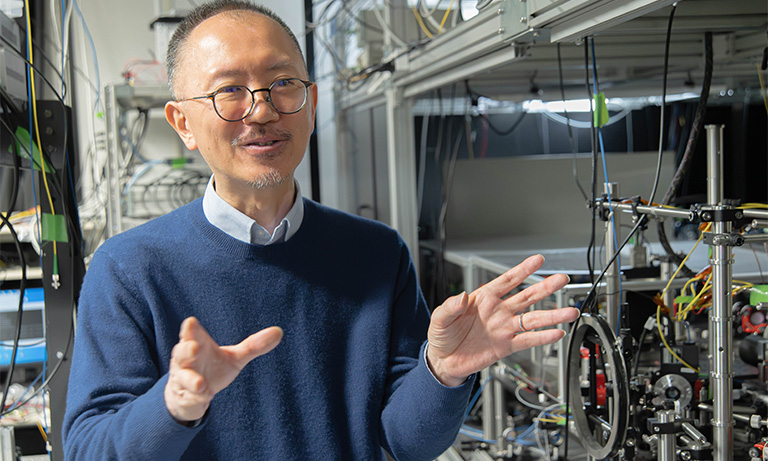
We interviewed Dr. Uesugi of the Japan Synchrotron Radiation Research Institute (JASRI), who was in charge of analyzing the samples, about the methods and results of the analysis, as well as future prospects.
- SPring-8, a world-class synchrotron radiation facility
- A specialist team for facilities and supporting users
- Analyzing the structure of materials using the synchrotron radiation X-ray
- The beginning of a multi-year analysis project
- Five years of preparation, one year of sample analysis
- Unforeseen challenges in analyzing Ryugu's samples
- The historic moment of taking a close look at the samples after five years of dedication
- Traces of water presence found on Ryugu
- Discovering one clue at a time to solve the mysteries of the origin and evolution of our solar system and the birth of life
- Hamamatsu Photonics' user-centric design and accurate data presentation
- Researcher profile
SPring-8, a world-class synchrotron radiation facility
-The samples from the asteroid Ryugu were brought to SPring-8, where you work, Dr. Uesugi. Could you explain what kind of facility SPring-8 is and its significance in your research?
SPring-8 is a facility that generates synchrotron radiation by accelerating electrons and conducts experiments using the generated synchrotron radiation. Synchrotron radiation includes light of all wavelengths, and SPring-8 is equipped to produce X-rays of particularly high energy (i.e., short wavelengths). Synchrotron radiation X-rays produced from electron energy of 8 GeV (giga electron volts) have high flux density, high directionality, high brightness, and can irradiate a very small area. SPring-8 uses this light for the structural analysis of microscopic materials. Producing high-brightness synchrotron radiation requires a massive facility measuring about 500 meters in diameter.
SPring-8 consists of three main facilities: a facility to generate high-energy electron beams (currently, electrons generated at SACLA are partially used at SPring-8), a facility to keep the accelerated electron beams rotating at a constant speed (storage ring), and beamlines using synchrotron radiation. The higher the electron energy, the brighter the light with better directionality, and the greater the change in the direction of the electron beam, the more light of shorter wavelengths, such as X-rays, is included. In other words, to obtain large energy, the size of the accelerator must be increased. This is one of the reasons SPring-8 is one of the largest facilities in the world, and the synchrotron radiation it produces is among the best in the world.
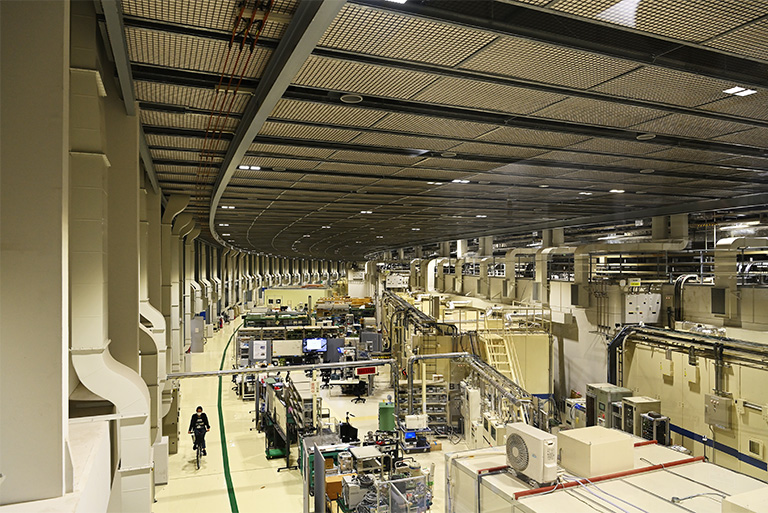
SPring-8 is a circular radiation facility with a diameter of about 500 meters. It is so big that people sometimes ride bicycles around the storage ring building that houses the beamlines.
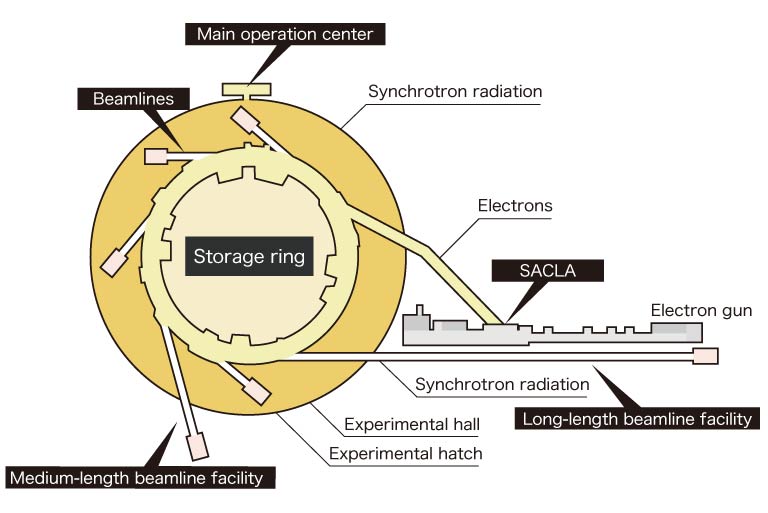
Internal structure of SPring-8
A specialist team for facilities and supporting users
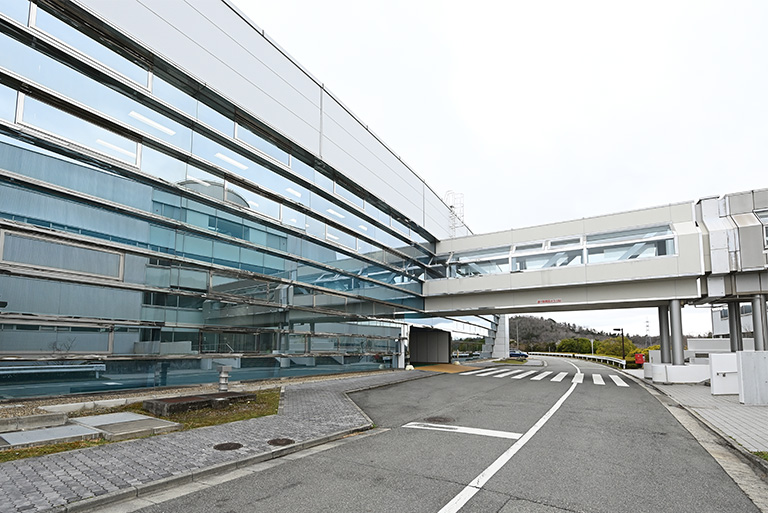
The research facilities are located in Harima Science Garden City in western Hyogo Prefecture. The vast site includes several experimental facilities and related facilities that support day-to-day research.
-What kind of institution is the Japan Synchrotron Radiation Research Institute (JASRI), where you work?
JASRI is a research institute that operates, maintains, supports the use of, and develops the necessary technologies for the SPring-8 large synchrotron radiation facility and the SACLA X-ray free-electron laser facility, which is operated by the National Institute of Physical and Chemical Research (RIKEN).
SPring-8 and SACLA are widely open to the public domestically and internationally. Many highly skilled staff members operate the world's most advanced synchrotron radiation facilities to ensure smooth, high-level use.
Analyzing the structure of materials using the synchrotron radiation X-ray
-Could you tell us why X-rays are used among the different wavelengths emitted by synchrotron radiation and what we can learn from experiments using X-rays?
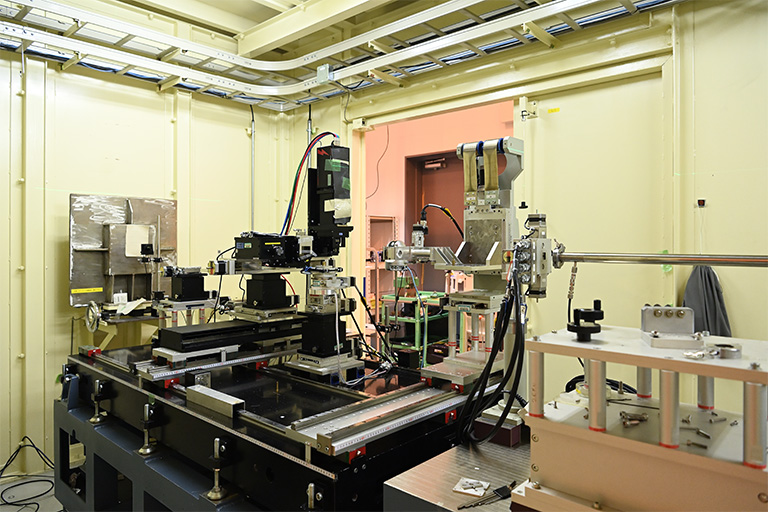
When you look at a sample with a visible light microscope, you start at a low magnification, say 5×. Once you have identified the area you want to observe, you can increase the magnification to 10×, 50×, etc., to focus on even finer areas. However, sometimes you cannot see what you want simply by turning the revolver of a microscope to change the magnification. You can then adjust the area and focus or adjust the amount of light entering the field of view since the narrower the field of view, the darker the field of view is. As I mentioned earlier, synchrotron radiation X-rays are much denser and can irradiate a much smaller area than X-rays produced by conventional X-ray sources. They are suitable for observing very fine objects such as the sample grains from Ryugu. Another notable property of X-rays is diffraction. Every material has a unique angle of diffraction of X-rays, so if you know the value of the angle of diffraction, you can determine the period of the material to which the X-rays were applied. In other words, after passing through the sample, the X-rays reveal the constituents of the sample.
Diffraction, along with imaging and spectroscopy, is a common method for determining the state of matter. In particular, diffraction is extremely effective at obtaining information by irradiating light on a tiny area. Now that we know just how useful X-ray synchrotron radiation is, let's build a large synchrotron radiation experimental facility to get information from even finer objects! And so, SPring-8 was born. Many new technologies that are advancing synchrotron radiation science have been developed at SPring-8. In the past, when people asked me, “What is SPring-8?” I often replied, “It's a big microscope,” but now I think I can just say it’s “an X-ray microscope.”
The beginning of a multi-year analysis project
-Could you tell us how you got involved in the analysis of the Ryugu samples?
A total of five teams—the Japan Aerospace Exploration Agency (JAXA), the National Institute of Polar Research, the Institute for Molecular Science, and the Japan Agency for Marine-Earth Science and Technology (JAMSTEC), in addition to SPring-8—are involved in preparing the Ryugu samples for analysis. These five organizations signed an agreement and began their preparations in 2015. My involvement in the analysis project began when the SPring-8 team, of which I was a member, raised its hand to help with the analysis. From that point on, we spent about five years preparing for the sample analysis.
Five years of preparation, one year of sample analysis
-Given the length of the preparation period, I assume there must have been numerous issues to address. What specific considerations did you take into account?
Our team was not only concerned with the analysis of the samples but also with other related issues. We carefully considered how to transfer the samples brought back from Ryugu to the tray in JAXA's clean chamber, how to divide the samples into small portions, and how to transport the samples to each facility. Since the sample analysis experiments are performed under vacuum or nitrogen conditions, we had to plan the experimental procedures, create the necessary instruments and containers, and develop new techniques for the experimental setups. In any case, we created everything from scratch through trial and error. Addressing these issues was a step-by-step process. Whenever someone came up with an idea, other members would suggest it might be useful for another purpose, and then they would make a prototype or do a test run. If it didn't work, another idea was considered. This was repeated over and over. It was time-consuming, but the collaborative team shared their wisdom across organizational boundaries to prepare for the sample analysis.
In the preparation phase, I considered the design of a sample holder with carbon nanotubes and a container to transport the samples without exposing them to the atmosphere. Many of my ideas are reflected in their designs. This isn’t exactly related to SPring-8, but JAXA has a curation facility where we planned to open the samples from Ryugu delivered to the ground, measure them with a spectrometer, measure their morphology, and take images. In order to do this, we needed a special sample holder and a device for relocation and storage. Curation team at JAXA came to me, saying “Mr. Uesugi, help us!” So, I took on the role of solving the problem. I was singled out or chosen from the collaborative team because, I guess, at that time they did not have the skills or knowledge to design holders and containers, and they were too busy to find the time to research it. So, that’s how things happened.
You can only bring limited materials into the curation facility and need to work in a chamber with rubber gloves. So, we need to make the operation mechanism and dimensions as simple as possible. Since anyone may operate it, a mechanism that requires a lot of force on the fingertips should be avoided. While discussing the matter with JAXA staff, I determined the material and shape of the glass containers for holding the samples, and designed from scratch the multi-stacked, high-density storage system for storing these containers. The case of Ryugu required a lot of careful consideration with great care. From there, while working with JAXA in a super rapid fashion, we drew drawings, made prototypes, and created prototypes with a 3D printer until we completed the project. Many of my designs are found in the chamber of the curation facility. In fact, these efforts have not earned me a single penny. I just did them as my hobby. But I took them on out of curiosity. This is how the sample holders and transport containers were made. It’s a secret but I guess I am allowed to tell you.
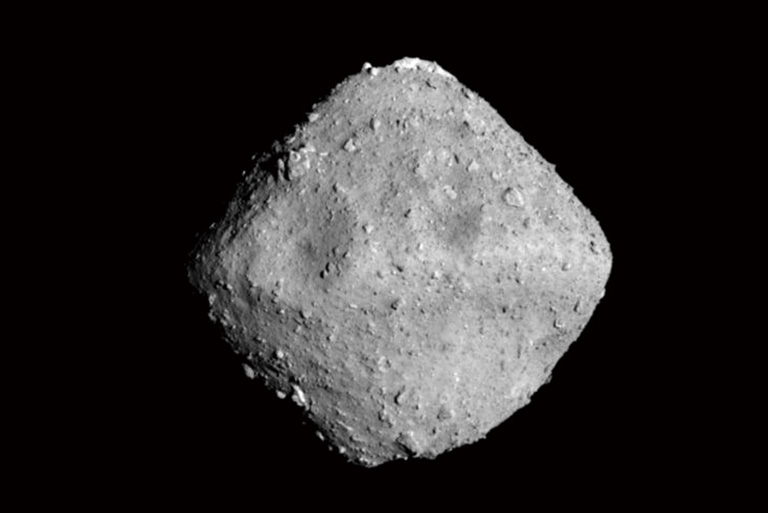
Ryugu taken from a distance of about 22 km
Data courtesy of JAXA, University of Tokyo, etc.
Unforeseen challenges in analyzing Ryugu's samples
-Even with all this careful consideration, were there any unknown factors that only became apparent once you actually obtained the samples? If so, could you share what those were?
We already knew that Ryugu was a C-type asteroid. C-type asteroids appear black when observed. This was also known from analyzing meteorites that had fallen to Earth, which showed that black materials contain large amounts of organic compounds. The presence of organic compounds suggests that it has never been exposed to temperatures of 100 °C or 200 °C since the formation of our solar system. This is because exposure to temperatures above 100 °C would evaporate both the water and the organic compounds. Asteroids without water and organic compounds appear white when observed, which is said to be the case with an S-type asteroid. Since Ryugu looks black, we guessed that it is a C-type asteroid, and that the samples that would reach the ground would contain both water and organic compounds. However, we could not be certain whether the samples had not been contaminated with substances on Earth, whether they had not been exposed to water, or what they were like before Ryugu was formed. We could only guess to the extent of “it may be so.” The most difficult thing to predict was the hardness. At the preparation stage, we had no idea whether the samples would be hard or fragile.
Since we didn't know much about the samples, we had to be careful not to expose them to the atmosphere, to water and oxygen, and to avoid rolling them over. But when they returned to Earth, they would enter the atmosphere, the parachute would open, and boom! They would hit the ground with a significant impact, causing the samples to experience a shock. Since I expected some physical damage to the samples, I was very careful about the material of the sample holders to avoid contamination. JAXA had restrictions on the materials that could be used in their clean chambers, so we learned about these conditions and decided that materials such as quartz or sapphire should be used for glass parts and Viton only for rubber.
The historic moment of taking a close look at the samples after five years of dedication
-What was everyone's reaction when the samples were transported to SPring-8 after safely landing on the ground?
Once the samples were safely delivered and placed on the experimental apparatus at SPring-8, the team members began competing to photograph them. With the lab barely able to accommodate two or three people, more than ten team members took turns entering the lab to capture the historic moment on camera.
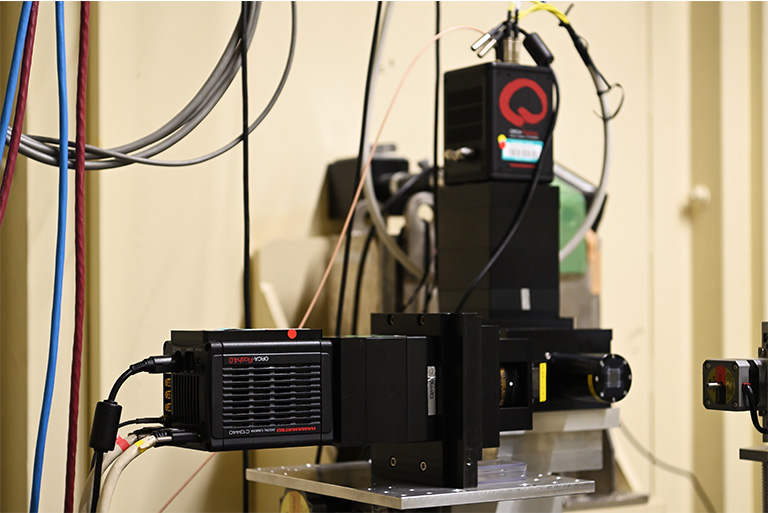
The size of the samples from the asteroid Ryugu ranged from 3 mm to 10 mm. They were placed on an experimental apparatus and their tomograms were taken with an X-ray CT. The images were projected on a large monitor in an adjacent room so that a large number of people could observe them together. Several samples were provided, so we took images and discussed them while projecting the results one by one. Every time an image appeared on the screen, voices rose from the audience with exclamations like “Wow!” or “Oh, it's cracked!” or “What in the world is that clump?” Inferential comments from a meteorite expert present at the meeting fueled even more lively discussion. We also had online meetings with officials in the UK. The actual imaging showed that some samples were as expected and some were unexpected. I was impressed by the unexpectedly smooth texture, or rather, the uniform appearance. We used Hamamatsu Photonics’ ORCA®-Lightning for the CT imaging. It worked well for this application.
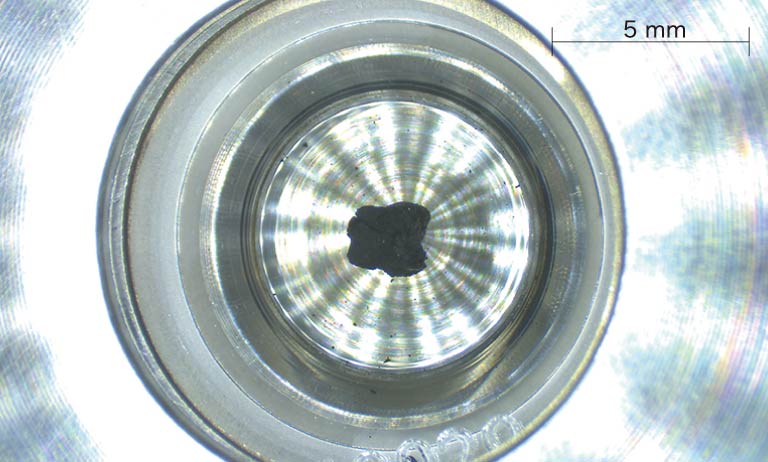
Ryugu grains: A0029
Data courtesy of JASRI Phase2 team Kochi
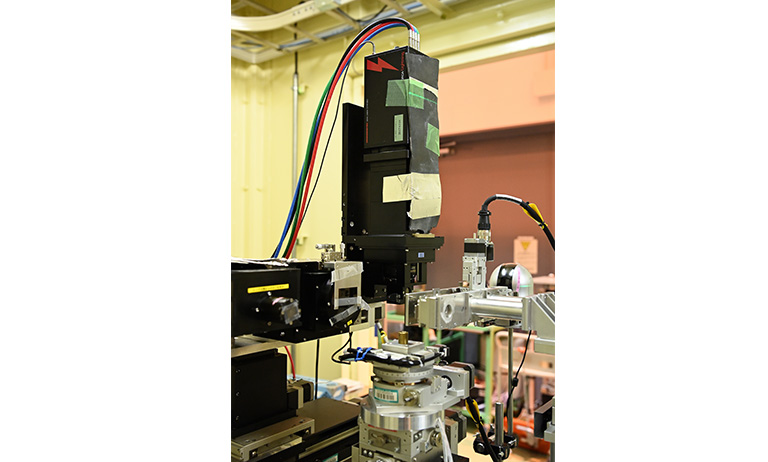
The ORCA-Lightning used for Ryugu’s sample analysis
Traces of water presence found on Ryugu
-What have you learned along the way from your X-ray CT analysis?
A closer look at the X-ray CT image reveals the presence of a carbonate mineral (CaCO3), well known as calcite and aragonite. Carbonate minerals are substances that cannot be formed without water. Their existence means that Ryugu had water or was in an environment where it was exposed to water. There were many clumps of various sizes. Why are there so many clumps, and why are they of different sizes? Our members considered whether the presence of multiple clumps indicated at least two exposures to water. Were there at least two periods of exposure to water, one when small clumps formed and another when large clumps formed? These findings were obtained over several days of viewing CT images. The samples also contained a lot of clay minerals in addition to carbonate minerals. If you imagine the soil in a schoolyard, you can better understand that water is needed to make clay minerals, and the presence of clay minerals proves that there is interlayer water. It is not yet known how much water was present, but it is evidence that water was present.
This was only a small part of what we discovered, and through repeated experiments at SPring-8, we determined that there are three patterns of evidence for the existence of water: a substance that has been exposed to water, a substance that contains water, and a substance that is itself water. It is very difficult to analyze Ryugu because it contains iron and other minerals in addition to water and the aforementioned minerals. Research teams outside of SPring-8 are also involved in the analyses, and I am sure that many more facts will be clarified in the future.
Discovering one clue at a time to solve the mysteries of the origin and evolution of our solar system and the birth of life
-How will the results of the Ryugu sample analysis contribute to the development of life sciences? What are your expectations?
I cannot say whether the findings will lead to the development of life sciences because I am not an expert, but what we have learned in the process of analyzing Ryugu is that there was a kind of precursor to Ryugu. We call it the parent body, which seems to have existed much farther away than Jupiter. In the past, our solar system was made up of many small celestial bodies that collided with each other. The dust from the collision drifted around and collided again, and so on. It is said that Mercury, Venus, Earth, Mars, and Jupiter, which are in the present solar system, were formed by the gradual growth of older bodies being incorporated into new bodies. Ryugu's parent body was destroyed by a similar process and part of it became a rubble pile satellite called Ryugu. The sun's gravitational pull then pulled the asteroid toward the sun, causing it to orbit near the Earth. This is the present story of Ryugu, of how it came to be. If we take a comprehensive view, using not only non-destructive analysis, which I do, but also destructive analysis, chemical analysis, etc., we will be able to depict the life of Ryugu from its birth to its disappearance, like the asteroid Itokawa, which is already known to disappear in another 1 billion years. I believe what we can learn from depicting the life of the asteroid is that we will be able to understand what happened before the current solar system was formed, that is, the origin and evolution of our solar system.
Even when you see a video at a museum explaining the origin of our solar system, you see a primitive solar nebula spinning around, and before you know it, the current solar system appears out of nowhere, right? This is because no one knows the exact origin or the process of its evolution. I think the process is really interesting, but it is very difficult to learn about. The only way to solve the mystery is to gather evidence from samples successfully returned from celestial bodies such as Ryugu, Bennu, and the Martian satellite Phobos. As we gather information, we will be able to unravel, one by one, what we did not know, and develop a common view of the history of the solar system that can be properly explained. In this way, I believe we can shed light on the origin of life. I hope to know some exciting results, maybe in 20 years or so. I will be about 70 years old then, hopefully still alive.
Hamamatsu Photonics' user-centric design and accurate data presentation
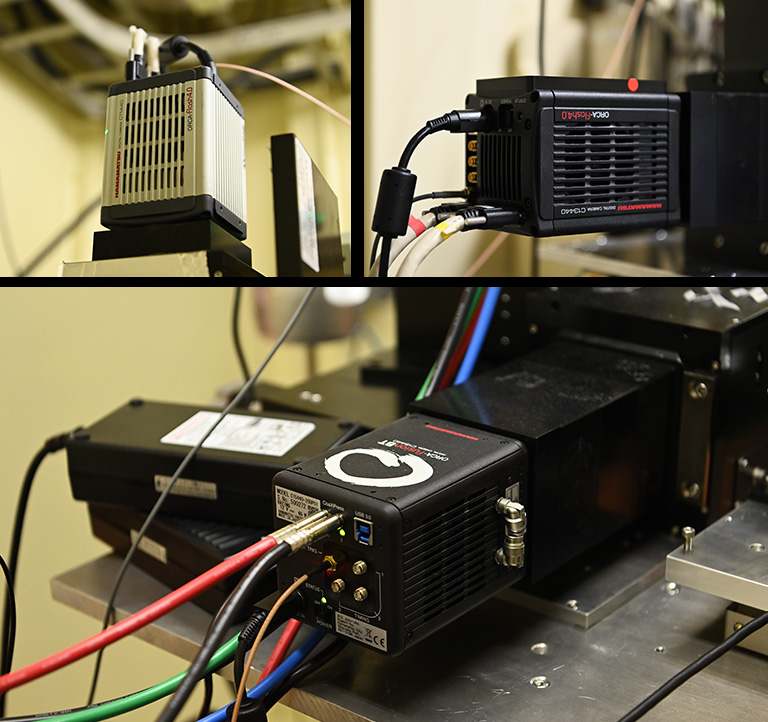
-Dr. Uesugi, you have been using our products, mainly cameras, for many years. We would love to hear from you about the appeal and benefits of using our cameras.
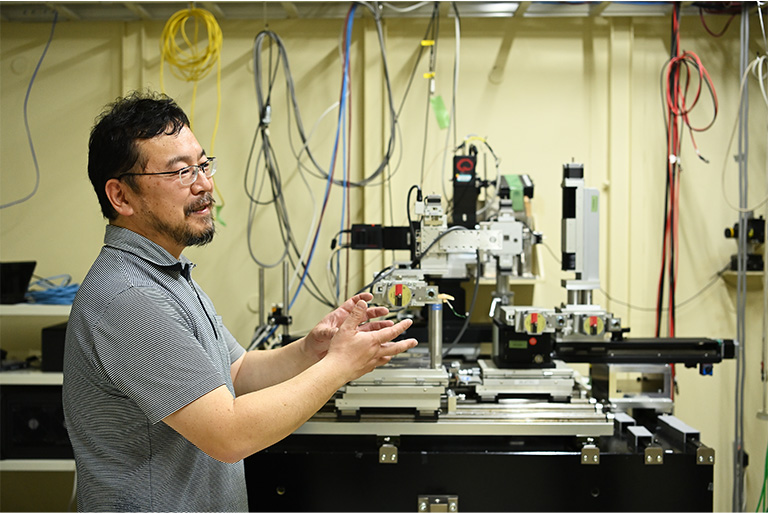
First of all, the measurement data is properly displayed accurately and without unnecessary adjustments. It is important to the user that unnecessary adjustments are not made to the image through image processing, etc. Second, I like the way the camera and software are designed from the user's perspective. They seem to be crafted based on the type of data users need. I also think that the engineers who develop these cameras must be quite passionate about their work. We ask many of your engineers to help us achieve our goals, and they consistently provide the answers we expect. I hope that Hamamatsu Photonics will continue to innovate and produce unique products that only your team can create.
Researcher profile
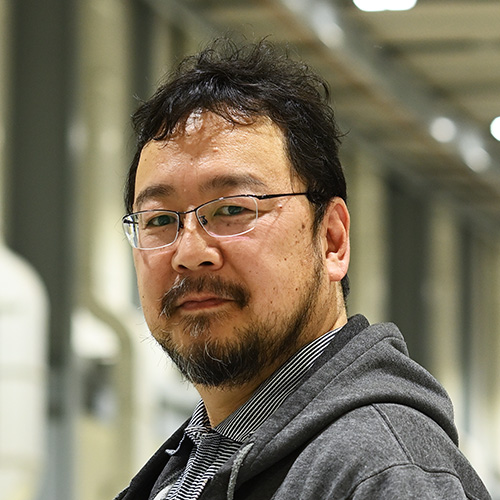
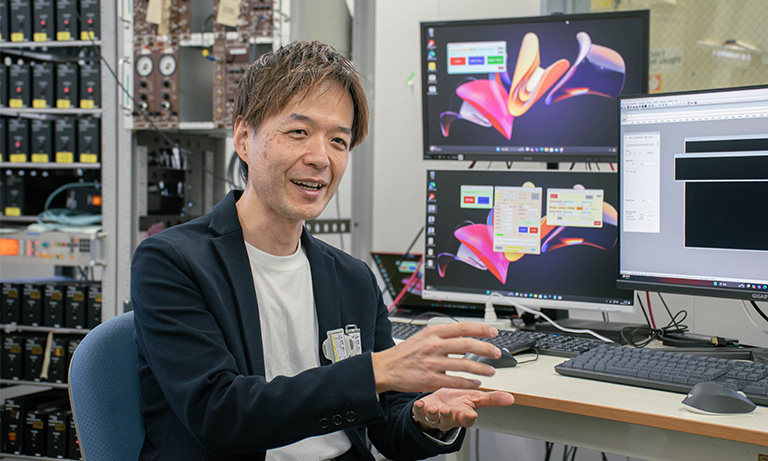
Dr. Kentaro Uesugi
Chief Scientist, Coordinator
Scattering and Imaging Division
Center for Synchrotron Radiation Research
Japan Synchrotron Radiation Research Institute (JASRI)
Born in Saitama, Japan, in 1973, Dr.Uesugi graduated from the School of Science at the Tokyo Institute of Technology and entered graduate school at the same university. During his PhD studies, Osaka University offered him a research position at JASRI, which operates and maintains SPring-8, a large synchrotron radiation facility. Since then, Dr.Uesugi has been continuously involved in everything from designing and fabricating experimental apparatus to conducting experiments, writing papers, and giving presentations to meet the global demand to “look inside with X-rays.” More recently, his analysis of the Ryugu grains brought back to Earth by the Hayabusa2 asteroid probe has attracted significant attention. In addition to being a chief scientist at SPring-8, he is also a visiting professor at Kobe University.
*The content presented on this page is based on an interview conducted in March 2023.
Related product
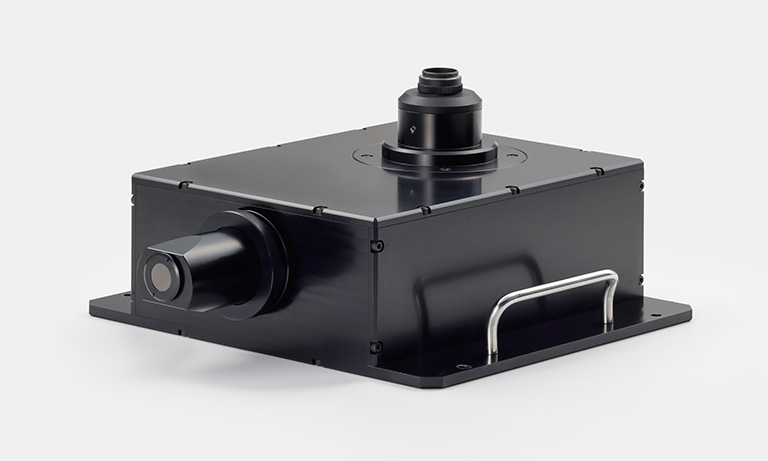
The high resolution X-ray imaging system is designed for the application of X-ray imaging in synchrotron radiation facilities. Real-time X-ray phenomena can be imaged by combining an imaging unit that uses a phosphor to visualize an incident X-ray beam, and Hamamatsu’s digital camera.
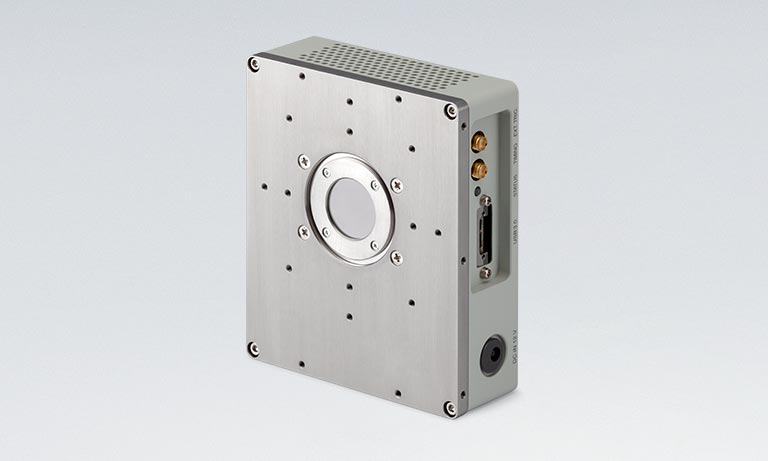
The C12849-111U is a high resolution and high sensitivity X-ray sCMOS camera. The camera's high resolution of 33 lp/mm makes it ideal for X-ray imaging of micro objects.
Other case studies
- Confirmation
-
It looks like you're in the . If this is not your location, please select the correct region or country below.
You're headed to Hamamatsu Photonics website for JP (English). If you want to view an other country's site, the optimized information will be provided by selecting options below.
In order to use this website comfortably, we use cookies. For cookie details please see our cookie policy.
- Cookie Policy
-
This website or its third-party tools use cookies, which are necessary to its functioning and required to achieve the purposes illustrated in this cookie policy. By closing the cookie warning banner, scrolling the page, clicking a link or continuing to browse otherwise, you agree to the use of cookies.
Hamamatsu uses cookies in order to enhance your experience on our website and ensure that our website functions.
You can visit this page at any time to learn more about cookies, get the most up to date information on how we use cookies and manage your cookie settings. We will not use cookies for any purpose other than the ones stated, but please note that we reserve the right to update our cookies.
1. What are cookies?
For modern websites to work according to visitor’s expectations, they need to collect certain basic information about visitors. To do this, a site will create small text files which are placed on visitor’s devices (computer or mobile) - these files are known as cookies when you access a website. Cookies are used in order to make websites function and work efficiently. Cookies are uniquely assigned to each visitor and can only be read by a web server in the domain that issued the cookie to the visitor. Cookies cannot be used to run programs or deliver viruses to a visitor’s device.
Cookies do various jobs which make the visitor’s experience of the internet much smoother and more interactive. For instance, cookies are used to remember the visitor’s preferences on sites they visit often, to remember language preference and to help navigate between pages more efficiently. Much, though not all, of the data collected is anonymous, though some of it is designed to detect browsing patterns and approximate geographical location to improve the visitor experience.
Certain type of cookies may require the data subject’s consent before storing them on the computer.
2. What are the different types of cookies?
This website uses two types of cookies:
- First party cookies. For our website, the first party cookies are controlled and maintained by Hamamatsu. No other parties have access to these cookies.
- Third party cookies. These cookies are implemented by organizations outside Hamamatsu. We do not have access to the data in these cookies, but we use these cookies to improve the overall website experience.
3. How do we use cookies?
This website uses cookies for following purposes:
- Certain cookies are necessary for our website to function. These are strictly necessary cookies and are required to enable website access, support navigation or provide relevant content. These cookies direct you to the correct region or country, and support security and ecommerce. Strictly necessary cookies also enforce your privacy preferences. Without these strictly necessary cookies, much of our website will not function.
- Analytics cookies are used to track website usage. This data enables us to improve our website usability, performance and website administration. In our analytics cookies, we do not store any personal identifying information.
- Functionality cookies. These are used to recognize you when you return to our website. This enables us to personalize our content for you, greet you by name and remember your preferences (for example, your choice of language or region).
- These cookies record your visit to our website, the pages you have visited and the links you have followed. We will use this information to make our website and the advertising displayed on it more relevant to your interests. We may also share this information with third parties for this purpose.
Cookies help us help you. Through the use of cookies, we learn what is important to our visitors and we develop and enhance website content and functionality to support your experience. Much of our website can be accessed if cookies are disabled, however certain website functions may not work. And, we believe your current and future visits will be enhanced if cookies are enabled.
4. Which cookies do we use?
There are two ways to manage cookie preferences.
- You can set your cookie preferences on your device or in your browser.
- You can set your cookie preferences at the website level.
If you don’t want to receive cookies, you can modify your browser so that it notifies you when cookies are sent to it or you can refuse cookies altogether. You can also delete cookies that have already been set.
If you wish to restrict or block web browser cookies which are set on your device then you can do this through your browser settings; the Help function within your browser should tell you how. Alternatively, you may wish to visit www.aboutcookies.org, which contains comprehensive information on how to do this on a wide variety of desktop browsers.
5. What are Internet tags and how do we use them with cookies?
Occasionally, we may use internet tags (also known as action tags, single-pixel GIFs, clear GIFs, invisible GIFs and 1-by-1 GIFs) at this site and may deploy these tags/cookies through a third-party advertising partner or a web analytical service partner which may be located and store the respective information (including your IP-address) in a foreign country. These tags/cookies are placed on both online advertisements that bring users to this site and on different pages of this site. We use this technology to measure the visitors' responses to our sites and the effectiveness of our advertising campaigns (including how many times a page is opened and which information is consulted) as well as to evaluate your use of this website. The third-party partner or the web analytical service partner may be able to collect data about visitors to our and other sites because of these internet tags/cookies, may compose reports regarding the website’s activity for us and may provide further services which are related to the use of the website and the internet. They may provide such information to other parties if there is a legal requirement that they do so, or if they hire the other parties to process information on their behalf.
If you would like more information about web tags and cookies associated with on-line advertising or to opt-out of third-party collection of this information, please visit the Network Advertising Initiative website http://www.networkadvertising.org.
6. Analytics and Advertisement Cookies
We use third-party cookies (such as Google Analytics) to track visitors on our website, to get reports about how visitors use the website and to inform, optimize and serve ads based on someone's past visits to our website.
You may opt-out of Google Analytics cookies by the websites provided by Google:
https://tools.google.com/dlpage/gaoptout?hl=en
As provided in this Privacy Policy (Article 5), you can learn more about opt-out cookies by the website provided by Network Advertising Initiative:
http://www.networkadvertising.org
We inform you that in such case you will not be able to wholly use all functions of our website.
Close